- Best Cheap Vst Plugins 2020
- Free Vst Plugins
- Best Cheap Vst Plug-ins
- Best Cheap Vst Plugins
- Best Free Vst Plugins
- Best Free Vst Effect Plugins
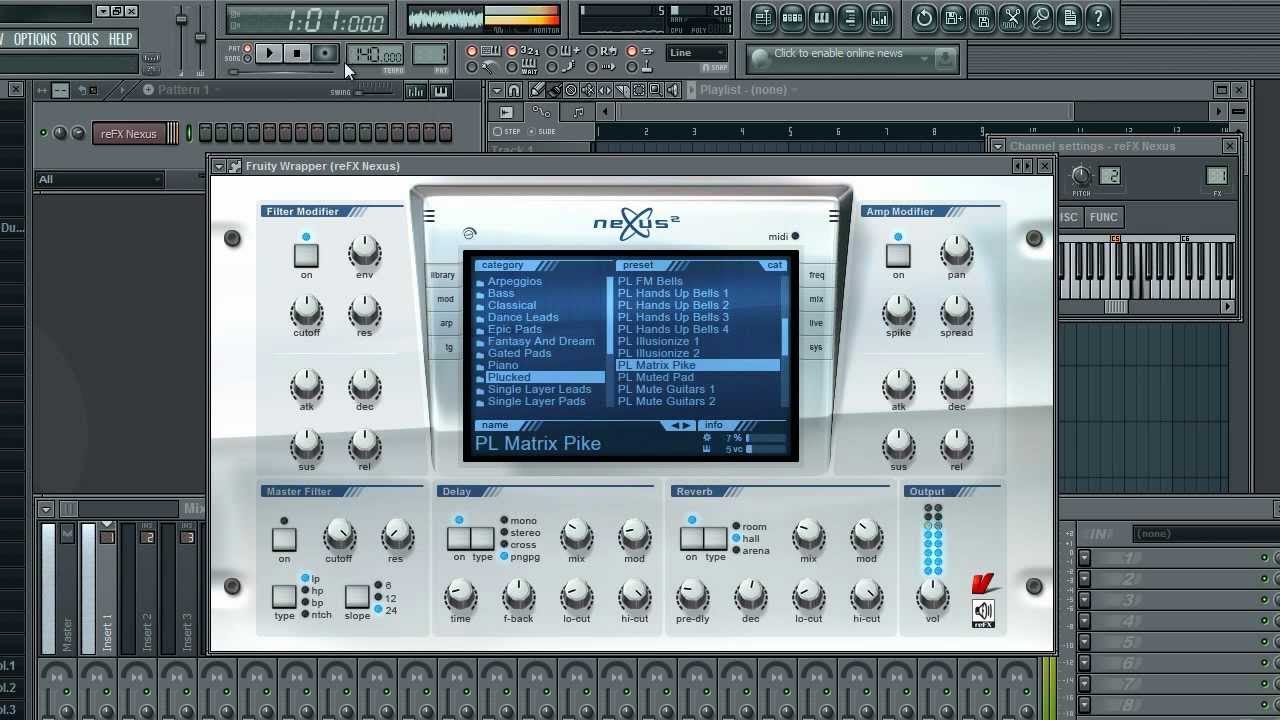
A VST is a virtual ‘plugin’, that is used to manipulate audio in some fashion. These are traditionally used in DAWs (digital audio workstations) like Fl Studio, GarageBand, Pro Tools etc. However also find use in video editing software like Sony Vegas. Check out the Dead Duck instrument bundle. It has an e-piano that is very Rhodes-like, an analog piano, and two other synths. They're basic but sound good and are free. For free VSTs, go dig around on KVR and VST 4 FREE.I would recommend getting Charlatan, Arminator (CS-80 clone), PG8X (JX-8P clone), Almost all of the TAL effects and plugins. Believe it or not, one of the best sounding pitch correction plugins (next to Melodyne,) is Reaper’s Reatune. While one can get a better overall experience in Melodyne, the amount of work is substantially lessened in Reatune. I would say Reaper’s plugin gets you 80% of the way that a thorough Melodyne edit will, in 10% of the time.
Whether you’re a home producer or work at a major recording studio, Autotune and other pitch correction software can help deal with a weak vocal performance.
In a hurry? I love Melodyne 4 Studio from Celemony. It’s sounds incredible, leaving little to no artifacts on vocals recorded in a treated space, but are in need of a little fixing.
But Autotune isn’t reserved exclusively for pitch correction. T-Pain popularized the hard-straightened pitch, even going as far as releasing an iOS app called “I Am T-Pain.”
Pitch correction software can also be utilized for other instruments as well. I’ve even used VariAudio (the “Autotune” built into Cubase) on bass guitar parts that were slightly out of tune. The result was surprisingly excellent, with little to no audio artifacts.
There’s a lot you can do with Autotune and similar software.
With so many options for producers, how can you decide on which one to use? Fortunately, I’ve had the experience working with many pitch correction plugins to weed out the good from the bad.
I’m going to include both free and paid options, so please read on!
Have an interest in virtual instruments? Don’t miss my other roundups!
Table of Contents
1) Antares Auto-Tune Pro (Paid)
Auto-Tune is the original pitch correction software. It’s so popular that its name is synonymous and is more of a colloquial term.
Antares gives you a couple of options to pick from depending on your needs — Pro, Artist, Access, or EFX+. As you’d guess, the price moves up the more features there are.
Auto-Tune is very hands-off. I’d even go as far as to say that it’s the most straightforward plugin for correcting pitch.
Pros
- Easy to use for beginners
- Lightweight on memory
- Great-looking user interface
Cons
- AUTO mode is limited
- Difficult for beginners to use GRAPH
- A little outdated compared
When using Auto-Tune on a vocal track in AUTO mode, set the key, the retune speed, and the amount of humanization. You should be able to hit the playback button now and hear hopefully great results.
Because it’s simplicity, I find that it doesn’t perform as well as others (when using the quick settings) that require more fine-tune vocal editing.
To fix an abysmal vocal performance, use the graph mode and hand tune each note to your liking. This process is much more complicated but yields a far better result.
I am not huge on Auto-Tune (I know many are), but it can deliver exceptional results. If you take the time to learn how to use it properly, you’ll have great-sounding vocals with ease.
Auto-Tune from Antares is available at Plugin Boutique.
2) Steinberg VariAudio — Cubase Pro (Paid)
Steinberg’s VariAudio is a pitch correction software included in Cubase Pro. It’s not a standalone plugin, so you won’t be able to use it if you don’t own Cubase Pro.
But, for those of you with Cubase who didn’t realize your DAW has pitch correction, rejoice!
I love VariAudio — so much so that I couldn’t imagine switching DAWs. I’ve been on Cubase for ten years, so I know my way around, but VariAudio is the one thing that will keep me as a forever customer.
Pros
- Integrated into Cubase
- Quick to edit any clip
- Very fast and no CPU
Cons
- Audio artifacts are very noticeable if not careful
- Limited cutting resolution
- Not intuitive at first
VariAudio functions similar to Melodyne and Auto-Tune’s graph mode. Double-clicking on a clip opens up the editor, where you can choose to enable VariAudio — no plugin required.
From here, it’s simple as using Pitch Quantize and Straighten Pitch on each clip. Cutting clips also helps pitch only individual sections of a waveform.
The newest version of VariAudio introduced some incredible options for adjusting pitch that make the software even more valuable.
I highly recommend considering Cubase Pro if you plan to switch DAWs — for VariAudio exclusively!
Steinberg’s Cubase Pro is available from Plugin Fox.
3) Celemony Melodyne (Paid)
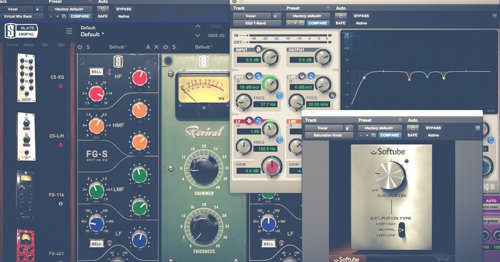
We’re moving up the price ladder, but for a good reason. Melodyne from Celemony is one of the most utilized pitch correction plugins used by professional vocal editors and producers.
Melodyne offers (to my ears) the most accurate and musical sounding algorithm, leaving no tuning artifacts that are easily recognizable to the untrained ear.
Pros
- Incredible-sounding algorithm
- Tons of flexibility when vocals sound poor
- Zero audio artifacts in most cases
Cons
- Difficult for new users
- Rather expensive
The software has incredible note detection allowing for more accurate tuning. I find that in VariAudio, there are times that the software cannot understand individual notes, so they are omitted. It’s not too often this occurs, but Melodyne does it better.
Melodyne is available at Plugin Boutique.
4) Waves Tune (Paid)
Waves Tune operates similarly to Auto-Tune and Melodyne. Before you begin tuning, the software scans the audio track and displays audio waveforms.
The process of editing is quite similar as well, though the interface is slightly dated.
Pros
- Included in many of Wave’s plugin bundles
- Relatively lightweight on CPU
Cons
- Outdated
- Difficult to use
I have never enjoyed using Waves Tune but figured it needed a mention since Waves is one of the most popular audio plugin companies.
5) Waves Tune Real-Time (Paid)
While cheaper than the regular version of Tune, Tune Real-Time offers a quick and user-friendly experience for tuning vocals. I’d compare this plugin to using Auto-Tune on AUTO mode.
Note transition is iffy at best and artifacts are present throughout (at least when I used it). The plugin isn’t smooth sounding at all, and there aren’t many parameter changes available.
I’d recommend Real-Time for two different scenarios. The first being someone new to audio production looking to fix a vocal without technical knowledge of tuning vocals. You won’t get the most professional sound, but it will be acceptable.
The second scenario is for producers working with singers in the studio who struggle to sing on pitch.
Using a pitch-correction software can boost the confidence of the singer in the booth, though I can’t say for sure if this will lead to a better sounding vocal take.
Despite the marketing of Waves Tune Real-Time, claiming instant vocal tuning, I could envision latency becoming an issue in some home studio settings.
Free Auto-Tune VST Plugins
If you’re on the fence about which one to get or want to save a little cash, try some of these free pitch correction plugins I’ve listed below.
Things To Consider When Choosing a Pitch Correction Software Plugin
Despite all the choices I’ve laid out, you still may be confused on the correct option. Here are some things to consider before making a decision.
Does the software maker provide a trial?
If so, take the trial and check out the software! There’s nothing more frustrating than buying a plugin only to find out that it’s non-refundable.
Do you need graph editing functionality?
Graph editing, like seen in Melodyne and VariAudio, is for advanced vocal editors. If you need a quick tuning for a little enhancement of a track, you may not need to edit each note.
If you want to draw in the notes physically, a more advanced pitch correction software will be necessary.
Further features you may desire are formant control, MIDI input (for vocoder), and note straightness. These types of effects are often essential in a lot of today’s popular music.
Does your DAW already have pitch processing?
Mine does — that’s why I’ve included VariAudio in this list. Digital audio workstations like Propellerhead’s Reason and MOTU Digital Performer also come with their native pitch correction software.
Wrapping Up
Which one do I like most? If I didn’t have VariAudio included in Cubase, I’d most likely be using Melodyne exclusively. It sounds incredible, and the workflow is so intuitive.
So there you have it — my list of the best Auto-Tune/pitch correction VST plugins. Which one do you currently use in the studio? I’d love to hear from you down below in the comments. Thanks for reading!
Distortion is an effect that most music producers learn to appreciate along the way. Especially if you are working outside of a professional environment, you’ll find that distortion is your friend. It helps your productions sound as if they were completed in a studio and not on your personal laptop.
The best distortion plugins typically emulate analog equipment that is way outside the budget of most people. They give us the opportunity to harness that same gritty tone without breaking the bank. So today we’re going to take a look at some of the greatest distortion plugins currently available. Check them out and see how they can take your mix to a new level.
Top 13 Distortion Plugins
1. Soundtoys Decapitator Analog Saturator
If you’ve taken to Google to see what you can find about distortion plugins, Soundtoys Decapitator is a name you’ll see pop up again and again. There’s a good reason for that—it’s probably the number one distortion VST’s currently on the market. It’s able to produce a wide range of saturation tones. If you want to take it to the edge, just click on the ‘Punish’ button and see what 20dBd of power can do for your sound.
The Decapitator is modeled after five highly respected pieces of gear. These are the Thermionic Culture Vulture, the EMI TG Channel, the two Neve 1057 preamps, and the Ampex 50. This plugin makes it easy to work with whichever of these saturation types you prefer thanks to the buttons conveniently located on its interface. You can also play with the Drive knob to amp up the sound.
One exciting feature is the added Mix control, which works great for parallel processing. You’ll definitely want to take advantage of this if you are using the Punish button in order to avoid a flat sound. Other features include a tone knob and a low and high-pass filter, which collaborate to “eq” the sound you produce. The Decapitator is compatible with just about any vocals or instrument you can imagine.
Pros
- Awesome hardware emulation
- Very user-friendly
- Helpful automatic drive and output linking for gain control
Cons
- There’s no transient control or de-esser
2. FabFilter Saturn Distortion Unit
FabFilter is known worldwide for their incredible plugins that provide distinctive interface designs and superior sounds. Saturn is their top-level distortion and saturation plugin. It offers incredible range for producers from subtle saturation to hard-hitting amp distortion. You’ll find an amazing selection of distortion models and three distinct distortion styles to work with.
The multi-band design and the feedback per-band feature will allow you to shape your signal throughout the frequency range, resulting in varying tones, dynamics, and modulation options. And if modulation is your focus, you’ll be impressed by the incredible modulation section that will help you inject life into your input signals. You can also add slight modulation to crossover frequencies to give them better clarity. In this section you’ll find an ample supply of XY controllers, EGs, MIDI sources, envelope followers, and LFOs.
One great thing about FabFilter plugins is that they offer you helpful hints as you work, and you’ll find that on the Saturn as well. This plugin will help boost your creativity and give you amazing results in the distortion realm.
Pros
- Superb sound
- Crossover setup is super easy with interactive display
- Impressive modulation system
Cons
- Not enough control over the compressor/expander
- Not able to see real-time modulated parameter movements
3. Softube Harmonics
As a producer it’s way too easy to add distortion to your mix with the best of intentions only to end up with a flat sound that’s devoid of all life. Softube Harmonics helps you avoid that unfortunate fate by working to preserve a track’s dynamics. It is among the very few distortion plugins currently available that tracks incoming dynamics. This gives you incredible control over the output signal, which is an absolute game changer.
On this plugin you’ll find mix control for parallel processing, high and low-cut filters, THD (total harmonic drive) metering, and other control parameters. You’ll also have five unique distortion models, each with their own analog processes. You’ll have all the tools required to capture that distinctive analog sound.
Softube’s Dynamic Transient Control technology is an incredibly powerful tool for producers. It allows you to achieve amazing warmth and grit without backing off on signal integrity. This is just one of many reasons Softube Harmonics comes so highly recommended.
Pros
- Beautiful analog sound
- Five different distortion styles
- THD metering for the best possible results
Cons
- No automatic gain compensation option
- Preset manager is disappointing
4. Soundtoys Radiator
Soundtoys Radiator is modeled after the Altec 1567A, a popular five-input, rack-mounted tube mixer from the 1960s. The Altec 1567A featured removable transformers, a two-knob EQ, and a distinctive green faceplate. It also offered an incredible 97dB of gain. The Radiator emulates that as a dual drive tube input channel and EQ unit. It faithfully recreates the grit and warmth found with the original hardware unit.
On this plugin you’ll find treble and bass controls along with parallel processing mix control. Its basic interface doesn’t limit your creativity as you explore the harmonic and saturation effects to create a wide range of tones that seem to come straight from the 1567A. You can also activate the “Noise” button for a little more analog goodness.
The Radiator comes with Little Raider, which is more ideal for working with individual tracks and also takes up less CPU. Radiator won’t overwhelm those who are just starting to explore distortion, and it offers enough effects to please even the most seasoned producer.
Pros
- Has a very wide sweet spot
- Awesome for all kinds of sources
- Incredibly user-friendly
Cons
Best Cheap Vst Plugins 2020
- Eats up a lot of CPU
5. iZotope Trash2
The iZotope Trash2 originated with the iZotope Trash multi-band distortion plugin. It has been rebuilt from the ground up to make your job easier and give you better results in your audio distortion. It offers wave-based distortion, so customizing your own distortion settings is no problem. You also have 60 algorithms to choose from in addition to any you come up with yourself along with four individual frequency bands to distort.
There are 20 filter types and several versatile oscillators found on each band. This plugin also provides various speaker models, cabinets, amps, and other simulation devices to help you create space in your mix. Then check out the effects module to add character and depth to your signals. The Trash 2 includes just about everything you could imagine to meet your distortion needs. If you’re just starting out with producing, it might be too much to take in all at once. But if you want one of the most versatile distortion plugins that will give you optimal results, the Trash 2 should be in your collection.
Pros
Free Vst Plugins
- Great selection of distortion sounds
- Impressive filter section
- Strong waveshaper section
Cons
- Doesn’t have filter-modulated presets
- No panned split routing
6. OhmForce Ohmicide: Melohman
The Melohman is the go-to distortion VST for many of the most successful producers in the game, including Armin Van Buuren and Skrillex. There are many reasons for this, including its incredible versatility and user-friendly interface. DJs also love all of the features this plugin offers that are designed with performance in mind. The Ohmicide: Melohman can go from the subtle to the extreme in terms of distortion effects. So whether you need to just add a little grit to your signal or launch an all-out assault on your sound, this plugin has you covered.
The Melohman gives you four different frequency bands to work with so that you can individually process points within the frequency spectrum. While working in a single band, you can adjust a number of parameters like distortion, dynamics, mixer, noise gate, and feedback. You will have your pick of 80 distortion types that range from classic analog saturation to harsher modern tones.
Melohman also features MIDI capability, which gives you the option to adjust the presets using almost any MIDI controller. You can make changes to the morphing speed, distortion levels, and so much more, which makes this an ideal plugin for live performers.
Pros
- Great selection of distortion types
- Awesome three-dimensional GUI
- Plenty of presets to pick from
Cons
- MIDI control is a bit buggy
7. D16 Group Devastor 2
At first it might seem that the Devastator 2 is doing way too much, but once you get into it, you’ll find that it’s actually quite simple and easy to use. D16 developed it as an extension of their well-known Phoscyon plugin with increased control for multi-band distortion.
There are four primary blocks found on this plugin. These include three multi-mode filter sections, an optionally activated signal limiter, diode-clipper distortion, and the Dynamics Flattener Module, which is an input signal processor that’s operated by a single knob. It comes with nine distinct connection topologies with the diode-clipper and its filters. This gives you a lot of freedom and creativity to process your sounds in a variety of ways.
You’ll find that the filters included with this plugin are similar to the band-pass, band-reject, low-pass, high-pass filters typically found in synthesizers rather than the peaking EQ type filters you might expect. This gives you customizable cutoff and resonance parameters to produce a unique distortion sound. The Devastator 2 gives you much more functionality and amazing sounds in a compact distortion than you would expect for the price.
Pros
- Incredible sound
- Impressive library of high-quality presets
- Practical routing options
Cons
- No modulation options
8. McDSP FutzBox Native
FutzBox is an interesting noise generator and lo-fi distortion effects box that can be effectively used to develop low-fidelity versions of dry signals. If you are involved in post production, you’ll want to have this plugin in your corner. It can recreate the sounds of cell phones, radios, televisions, and much more with its user-friendly interface. FutzBox features three distinct simulation technologies that offer accurate modeling without taking up too much CPU, which isn’t common with convolution-based products.
In addition to the SIM libraries found on this plugin, you’ll also have distortion, gating, EQ, filtering, and a noise generator to work with for your distortion needs. You can then combine the distorted audio with the original audio for parallel processing. Users will also be able to record while using the Futzbox because of its impressive low latency.
Pros
- Lots of authentic simulations
- Great range of processing options
- CPU-friendly
Cons
- Not quite as realistic as true convolution
9. D16 Group Redoptor 2
Redoptor 2 is modeled after a tube distortion module, and it authentically recreates the distinctive sounds that are produced by actual tube saturation units. If you are looking for breakup sounds, the tube amplifier is where it’s at. This plugin gives everyone an opportunity to play with overdriven or distorted sounds. You can use its tools to give life and strength to a signal. You can apply subtle compression and create a beautiful harmonic blend.
Redopter reacts to the dynamics of your signal like only a tube amplifier can, so you can be sure that your results will not fall flat. Loud incoming signals will be crunchy and heavily saturated. This plugin gives you the tools to cut your highs and lows. You can also attack any unwanted peaks in your audio with the four-band parametric equalizer.
This plugin also gives you independent stereo channel processing capability with a separate path for each signal. This will improve your signal’s clarity and stereo imaging by avoiding cross-blending. The Redopter 2 is a fantastic option if you are looking for a top-level vintage tube distortion emulator that gives you the freedom to be creative with your distortion.
Pros
- Impeccable tube simulation
- Great valve behavior control
- Diverse selection of presets
Cons
- Could be more versatile
10. Kuassa EFEKTOR Distortion Bundle
You may not be familiar with Kuassa, but you’ll want to check out the EFEKTOR Distortion Bundle, which includes many of the most in-demand dirt effect pedals out there. The bundle comes with three distortion devices, including the FZ3603 Fuzz, the OD3603 Overdrive, and the DS3603 Distortion. These pedals are emulations that include parameters from a total of 30 pedals, offering you the amazing opportunity to explore different sounds. These parameters are easily controlled through three knobs, including one wet-dry knob. This simple setup is very approachable for beginners and professionals alike.
You’ll be impressed with the tones that you are able to dial in with your guitar or other signals. The low-latency quality also means that it’s possible to use in live situations. There is also a rack extension available that gives you additional versions of the included pedals.
Pros
Best Cheap Vst Plug-ins
- Three essential guitar effects to pick from
- CPU-friendly
- Get a lot for what you pay
Cons
- Doesn’t have a rack module like other pedal plugins
11. Softube Saturation Knob [FREE]
Softube is offering a free gift with its Saturation Knob plugin. It’s designed with only one knob, so it couldn’t be any easier to use. It’s an ideal option for modeled output distortion if you want to add grit to almost any type of signal. You can use it in several other ways, for example, to fatten up the low end of your bass lines, add shimmering harmonic distortion to your vocals, or completely mangle a drum loop. It can be integrated as a module in Softube’s Eurotrack Module Platform, or you can also use it as an insert in your DAW.
You’ll find three modes included in the Saturation Knob: Keep Low, Neutral, and Keep High. Each of these gives you varying options for how you can apply distortion to your signals. Use the Keep Low mode if you want to preserve your low end while distorting your drums, for instance. The functionality of the Saturation Knob is fairly limited, but it’s free so we’re definitely not complaining.
Pros
- Can get as a free standalone VST3 plugin
- Very user-friendly
- Offers three different modes
Cons
- Requires an iLock to run
12. PSP Audioware PSP VintageWarmer2
The PSP VintageWarmer was a game changer when it was first introduced years ago, and it is still one of the most popular saturation plugins on the market today. It stands toe to toe with any of its competitors in the saturation arena. It was designed to be used by professionals, so it has all the tools and features you’ll need to produce a professional sounding mix.
Like many others out there, it’s based on an analog-style single or multi-band compressor and limiter. It offers a user-friendly interface and an extensive collection of presets to make the job easier. You’ll be able to achieve everything from soft, warm compression to hard-hitting limiting. This plugin works well for both mixing and mastering. If you’re looking to create analog tape recorder saturation effects, the VintageWarmer 2 has you covered.
Beyond what you would expect, the VintageWarmer 2 also includes VU and PPM metering with reliable overload indicators, which will help to elevate your sound even further. Your purchase also comes with MicroWarmer, which features a basic single-band interface. It also gives you the option of using the VintageWarmer LE, which provides the same functionality as the VintageWarmer 2 but takes up less resources.
Pros
- Awesome sound
- Auto-release is very beneficial
- The FAT mode is amazing
Cons
- Without proper use, it can ruin your mix
13. Waves GTR3 Amps
The Waves GTR3 Amps is an awesome distortion plugin to have in your arsenal even if you don’t play guitar. The number of sound options it includes is way more than you would expect for the price. Waves found a way to emulate a range of vintage and modern amplifiers with this plugin, including models from Mesa/Boogie, Vox, Marshall, Fender, and many others. The GTR3 also features innovative sampling technology with techniques that far exceed the standard modeling that’s typically used by amplifier companies. This means you can get high-quality amp tones just by using the software.
You’ll be able to use this plugin in the live realm thanks to its low-latency quality. You will also have an incredible range in your work thanks to the more than 30 cabs, 30 guitar amps, and 25 stompboxes that are included. Each amplifier is made up of 25 custom guitar amps with nine models geared toward high-gain tones. You’ll also have the freedom to work with different equipment since you can play through two cabinets simultaneously and record with two separate microphones.
Among the 25 stomps you’ll find Flanger, doubler, Delay, Phaser, distortion, Fuzz, and almost any guitar pedal imaginable. The pedals also include real-time MIDI control and sync-to-host BPM features that make life easier for you. The six studio microphones are from reputable brands like RCA, Sennheiser, Neumann, AEA, and others. With the GTR3, you will expand your horizons in a big way with countless guitar tones.
Pros
Best Cheap Vst Plugins
- Impressive selection of different guitar tones
- Very user-friendly
- Ideal for live use
Cons
- Not possible to integrate with floorboards
- Expression pedals are quite fidgety
Best Free Vst Plugins
Warm up to Distortion
Best Free Vst Effect Plugins
That wraps up our collection of some of the best distortion VST’s you can currently get your hands on. These will give you an opportunity to explore the sounds you can create while embracing the classic warmth of analog hardware. Your mixes will definitely only improve as you add more of these plugins to your toolbox.